


Selecting the right method for exterior surface restoration often comes down to a fundamental decision: temperature. While high-pressure water is a powerful force on its own, the thermal energy of the water stream completely changes how contaminants behave on a microscopic level. For property owners managing tough buildup, understanding these differences is the key to protecting surfaces and achieving a lasting clean.
At Golden Choice Pro-Wash, we encounter a wide variety of outdoor messes, from simple airborne dust to deeply embedded industrial grease. Using cold water on a stain that requires heat can lead to surface scarring, wasted time, and incomplete sanitation. This guide breaks down the science of temperature in exterior maintenance so you can make an informed decision for your property.
The Physics of Clean: Why Temperature Matters
To understand The Benefits Of Hot Water Pressure Washing Vs Cold Water Cleaning, it helps to look at how different substances bond to your property’s surfaces. Cold water pressure washing relies entirely on kinetic energy—the physical force of the water striking the surface—to blast away dirt. While this mechanical force is highly effective for loose debris, sand, and powdery dirt, it struggles against chemically bonded soils.
Hot water pressure washing introduces thermal energy to the equation. When water temperatures reach up to 200 degrees Fahrenheit, the heat acts as a catalyst that liquefies oils, thins heavy greases, and melts sticky resins. This dramatic reduction in viscosity allows the water to lift and flush away stubborn substances that cold water would simply push around.
The Soap Analogy
Think of washing greasy dishes in your kitchen sink. If you try to clean a butter-coated pan with freezing cold water and soap, the grease congeals, hardens, and smears across the surface. Once you turn on the hot tap, the grease melts instantly and washes down the drain. The exact same molecular reaction occurs on your driveway, siding, and walkways.
Key Advantages: The Benefits Of Hot Water Pressure Washing Vs Cold Water Cleaning
When comparing these two methods, the advantages of thermal cleaning become clear across several specific scenarios. While both systems have their place in a professional maintenance routine, hot water excels in areas where cold water falls short.
- Rapid Emulsification of Grease and Oil: Hydrocarbons like motor oil, hydraulic fluid, and kitchen grease bond tightly to porous concrete. Hot water breaks these chemical bonds rapidly, pulling the oils to the surface for safe extraction.
- Decontamination and Sanitization: High temperatures kill organic spores, bacteria, algae, and mold on contact. This heat-based sterilization prevents the rapid regrowth of biological organisms, keeping surfaces clean for much longer.
- Reduced Chemical Dependency: Because heat does the heavy lifting, technicians can often use milder, more eco-friendly detergents, minimizing the chemical footprint left on your surrounding landscaping.
- Lower Pressure Requirements: Since heat softens the bond of the contaminant, less physical impact pressure (PSI) is needed to clear the surface, protecting delicate materials from erosion.
When Cold Water is the Correct Choice
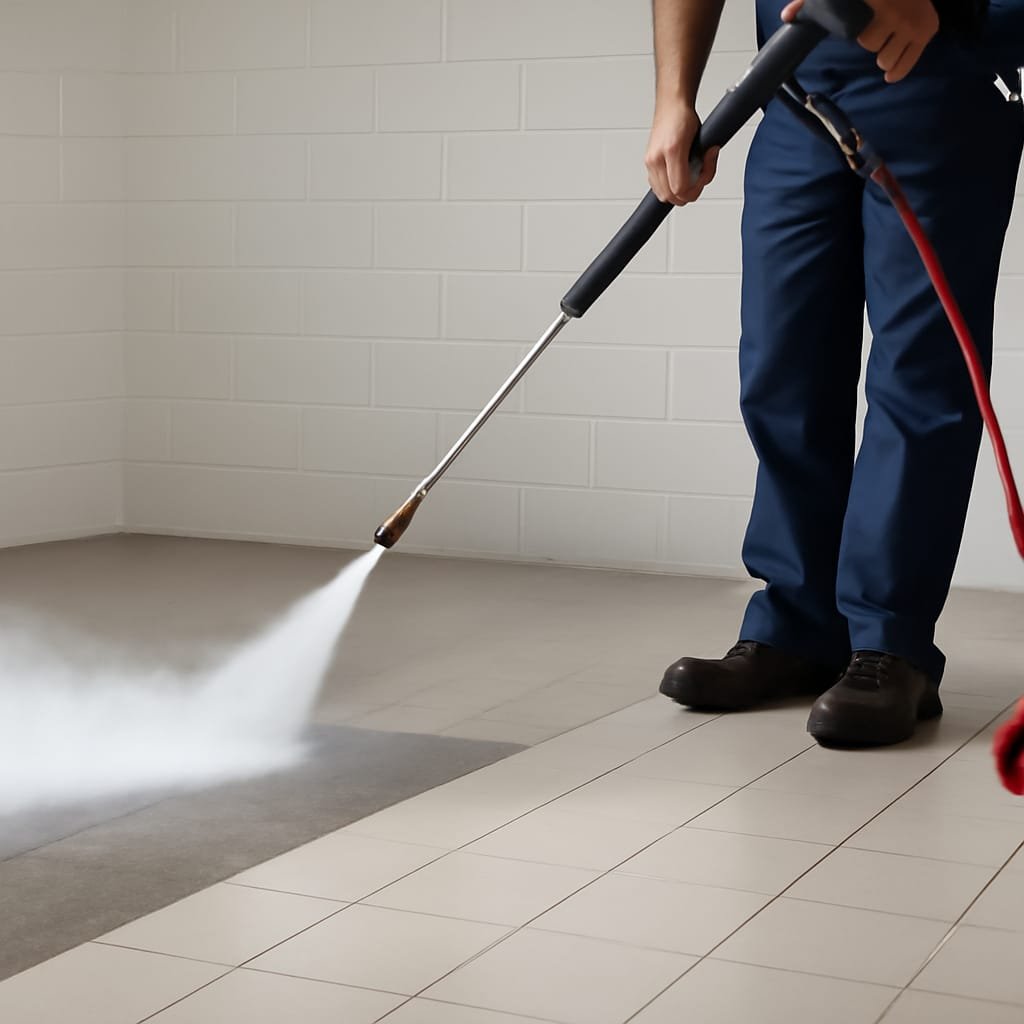
Despite the incredible power of heat, cold water cleaning remains a vital tool in the exterior maintenance industry. It is not a matter of one method being universally superior, but rather choosing the right tool for the specific substrate.
Cold water systems are the industry standard for clearing away simple environmental accumulations. Clay, mud, loose dirt, and stripping old paint from wood are all tasks perfectly suited for cold water application. Furthermore, certain delicate materials like thin plastics, specific vinyl sidings, and fresh wood can warp or suffer structural degradation if exposed to extreme heat.
At Golden Choice Pro-Wash, our technicians assess the structural integrity and material composition of your surfaces before starting. This ensures we never apply thermal stress to a substrate that requires a gentle, cold-water approach.
The Hidden Challenge: Managing Thermal Shock
One critical factor that is rarely discussed outside of professional circles is the risk of thermal shock. This phenomenon occurs when a highly heated stream of water is applied to a cold, rigid surface, causing rapid localized expansion.
For example, applying hot water to freezing concrete during a chilly morning can cause the surface layer to crack, spall, or scale. Similarly, hot water sprayed onto cold window panes can cause the glass to shatter instantly. Professional teams like Golden Choice Pro-Wash carefully manage ambient temperatures and surface conditions to eliminate the risk of thermal shock entirely.
Surface Guide: Choosing Your Method
- Commercial Dumpster Pads: Always requires hot water to sanitize decaying organic waste and melt sticky grease.
- Residential Wood Decks: Best suited for cold water or low-pressure soft washing to prevent damaging the wood fibers.
- Driveways with Oil Stains: Highly benefits from thermal washing to draw deep-set oils out of the porous concrete.
- Silt and Construction Mud: Easily cleared using standard cold water pressure washing.
Maximizing Your Property’s Longevity
Understanding The Benefits Of Hot Water Pressure Washing Vs Cold Water Cleaning allows property owners to budget more effectively and protect their physical assets. Standard dirt buildup can be handled quickly with cold water, but when dealing with organic growth, oils, or heavy soot, investing in hot water cleaning saves time and yields a far superior result.
Choosing the wrong temperature can lead to permanent etching, water intrusion, or incomplete sanitization. Working with an experienced team ensures that your concrete, brick, and siding are treated with the exact temperature, pressure, and detergent balance required for a safe, sparkling finish.
If you want to restore your property’s surfaces safely and effectively, contact Golden Choice Pro-Wash today to discuss the best cleaning strategy for your home or business.