

The Dual Threat to Your Property’s First Impression
The entrance of any commercial property or busy facility serves as its physical handshake with the public. Within seconds of arrival, visitors, clients, and tenants form an subconscious opinion about the standards of your operations based entirely on the cleanliness of your walkways.
Unfortunately, high-traffic entryways are constantly bombarded by two of the most stubborn types of cosmetic degradation: dark, rubbery skid marks and flattened, blackened circles of discarded bubble gum. Addressing these eyesores requires a strategic approach, as standard rinsing methods rarely make a dent in these highly adhesive substances.
Understanding the science behind Removing Tire Marks Chewing Gum From Sidewalks Entrances is the first step toward restoring the pristine look of your concrete. Without the right preparation and knowledge of material chemistry, property managers often risk permanently etching their masonry or leaving behind unsightly ghost stains.
The Chemistry of Concrete Contamination
To effectively clear these unsightly blemishes, it helps to understand why they are so incredibly difficult to wash away with standard utility pressure hoses. Both rubber and chewing gum are highly cohesive polymers designed to stretch, grip, and bond to porous surfaces under pressure and heat.
When a delivery vehicle or passenger car turns its wheels sharply on a concrete apron, the friction generates intense local heat. This heat melts a microscopic layer of tire rubber directly into the open pores of the concrete surface. This is why simple cold-water blasting often fails; the rubber is not just sitting on top of the stone, but is actually fused within the top layer of the substrate.
Similarly, chewing gum is formulated with synthetic elastomers that become highly pliable when warm. When stepped on, the weight of pedestrian foot traffic forces the sticky resin deep into the textured valleys of the sidewalk. Over time, these spots collect atmospheric dust, engine exhaust, and dirt, turning into the familiar black spots that plague busy doorways.
Best Practices for Removing Tire Marks Chewing Gum From Sidewalks Entrances
Successfully clearing these stubborn residues without damaging the underlying concrete requires a balance of thermal energy, specialized chemical breakdown, and controlled pressure. Industry experts like Golden Choice Pro-Wash recommend a systematic methodology to ensure the structural integrity of the concrete remains intact during the restoration process.
- Thermal Activation (Hot Water): Utilizing commercial-grade hot water pressure washers is essential. Water heated to temperatures between 180°F and 200°F melts the synthetic binders in gum and softens vulcanized tire rubber, releasing their grip on the concrete pores.
- Targeted Chemical Pre-treatment: Applying biodegradable citrus-based solvents or specialized hydrocarbon softeners helps dissolve the polymer chains of the rubber and adhesive resins before any physical pressure is applied.
- Controlled Surface Pressure: Using specialized flat-surface cleaners rather than concentrated spray wands ensures even distribution of pressure. This prevents the “zebra striping” or deep gouging that occurs when high-pressure streams are held too close to the concrete.
- Post-Treatment Sanitization: Once the physical solids are removed, treating the area with a mild sanitizing wash removes the residual sugars and oils left behind by gum, preventing rapid re-soiling of the same spots.
The Hidden Challenge of “Ghost Staining”
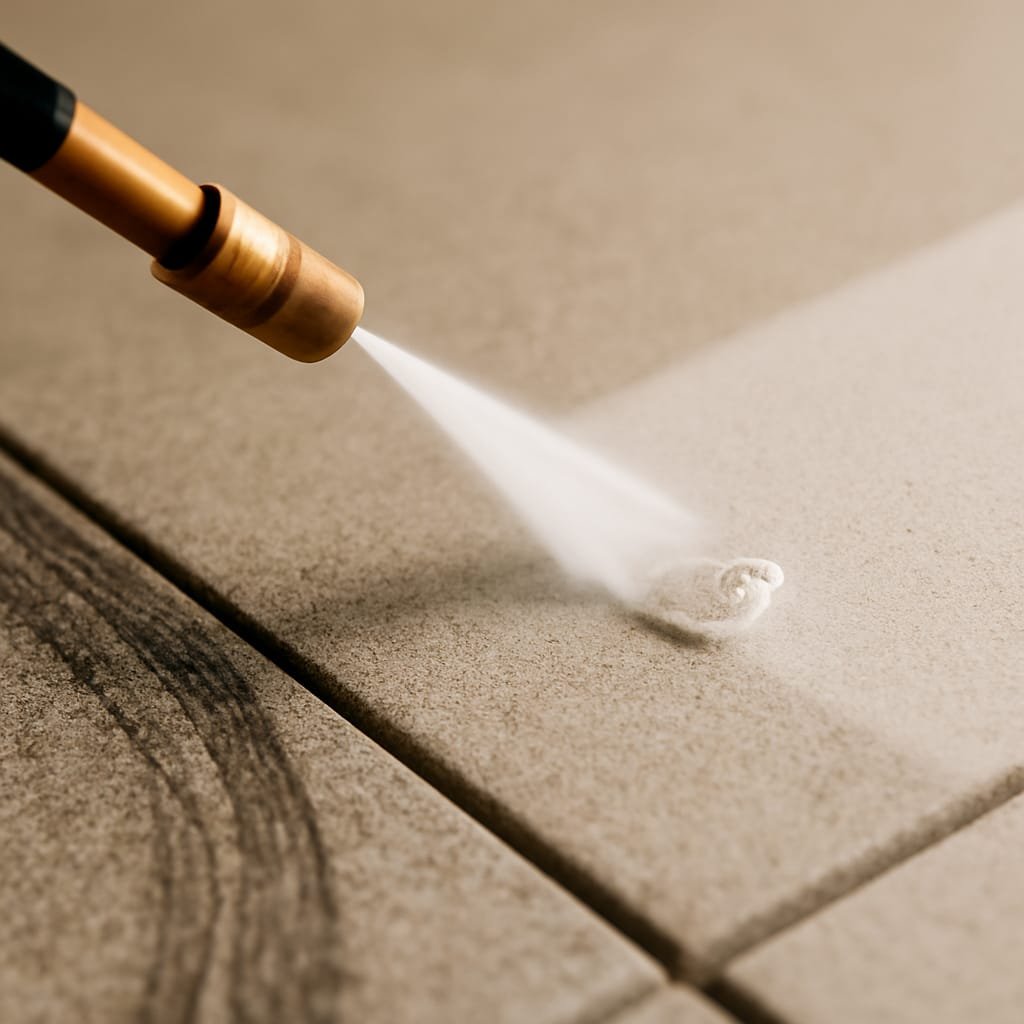
A common pitfall in the process of Removing Tire Marks Chewing Gum From Sidewalks Entrances is the appearance of ghost stains. Even after the physical mass of the rubber or gum has been successfully lifted, a dark silhouette or a strangely clean spot often remains visible on the pavement.
In the case of tire marks, plasticizers and carbon black can penetrate deep into the concrete matrix, leaving a shadow behind. For chewing gum, the oils within the gum act as a protective barrier, keeping the concrete directly beneath it clean while the surrounding sidewalk naturally darkens from dirt and pollution over several years.
To blend these areas back into a uniform appearance, a professional deep-clean of the entire entrance area is necessary. Golden Choice Pro-Wash utilizes specialized blending techniques that restore uniform color across the entire concrete pad, ensuring that spot-treatment areas do not look patchy or uneven.
Why Traditional DIY Methods Can Cause Permanent Damage
When faced with unsightly entryways, it is tempting to hand a high-pressure wand to a maintenance worker. However, concrete is surprisingly delicate, especially when dealing with the high-strength PSI required to blast away cured rubber or hardened polymers.
Using excessive pressure with cold water can easily blow out the cream coat—the smooth, protective top layer of the concrete. Once this cream coat is damaged, the rough aggregate underneath is exposed. This not only ruins the appearance of the entrance but actually makes the surface more porous, allowing future dirt, gum, and tire marks to bond even deeper into the stone.
Furthermore, using incorrect chemical stripping agents can run off into nearby landscaping, killing decorative plants and violating local environmental runoff regulations. Professional restoration teams utilize specialized reclamation systems to ensure all wash water is managed responsibly.
Maintaining a Welcoming Entryway Year-Round
Once your walkways are restored, implementing a proactive maintenance plan is the most effective way to protect your investment. Regular sweeps, immediate spot cleanups, and scheduling seasonal deep cleans prevent rubber and gum from curing deeply into the masonry.
Investing in high-quality entryway mats, strategically placing trash receptacles near doors, and installing clear signage can also dramatically reduce the amount of litter dropped near your main access points.
If you are struggling with stubborn buildup and want to restore the clean, professional appearance of your property’s walkways, contact Golden Choice Pro-Wash today to schedule a comprehensive surface assessment.