

At first glance, flat concrete looks practically indestructible. Homeowners and property managers often view driveways, sidewalks, and patios as solid stone blocks that can withstand almost any cleaning method. However, without the right approach, Pressure Washing Concrete can quickly lead to permanent, irreversible surface damage.
While high-pressure water is highly effective at removing deep-seated dirt, algae, and stubborn stains, it also holds the power to erode the top layer of your pavement. When amateur operators rent heavy-duty machines, they often overlook the fragile nature of cured cement. Golden Choice Pro-Wash has put together this essential guide to help you understand the hidden risks of DIY concrete cleaning and how to protect your investment.
Understanding the Vulnerability of Cured Concrete
Concrete is a mixture of cement, water, aggregate, and sand. During the curing process, a thin, smooth layer known as the cream rises to the surface. This top layer gives your driveway or patio its clean, uniform appearance and helps seal out moisture.
Industry research shows that newly poured concrete takes up to a year to fully cure and reach its maximum structural strength. If you attempt Pressure Washing Concrete that is less than a year old, the intense pressure can easily strip away this cream layer. Once this protective surface is compromised, the aggregate underneath becomes exposed, leaving you with a rough, sandy, and uneven surface that deteriorates rapidly.
The Danger of Etching and Scarring
Even on older, fully cured driveways, improper technique can leave permanent scars. Etching occurs when a high-pressure spray pattern is held too close to the surface or swept back and forth unevenly. These permanent whip marks and stripes cannot be washed away, as they are actual physical gouges carved into the stone.
The Critical Role of PSI and GPM
Many people believe that more pressure always equals a faster, better clean. In reality, successful Pressure Washing Concrete relies on a delicate balance between Pounds per Square Inch (PSI) and Gallons per Minute (GPM). Utilizing too much pressure is the primary cause of surface destruction.
- Excessive PSI: Most residential concrete should never be subjected to pressures exceeding 3,000 PSI. Commercial-grade machines can reach up to 4,000 PSI or more, which is powerful enough to slice through wood, destroy mortar joints, and degrade concrete surfaces.
- Inadequate GPM: Water volume (GPM) is actually more important than pressure. High volume flushes away the dirt and grime that the cleaning solution has broken down, allowing for a safer, more efficient clean without relying on destructive pressure levels.
- The Wrong Nozzle Tip: Using a narrow zero-degree red nozzle concentrates the entire force of the machine into a tiny, laser-like stream. This tip should never be used on concrete as it will immediately carve deep gouges into the surface.
How Golden Choice Pro-Wash Prevents Surface Damage
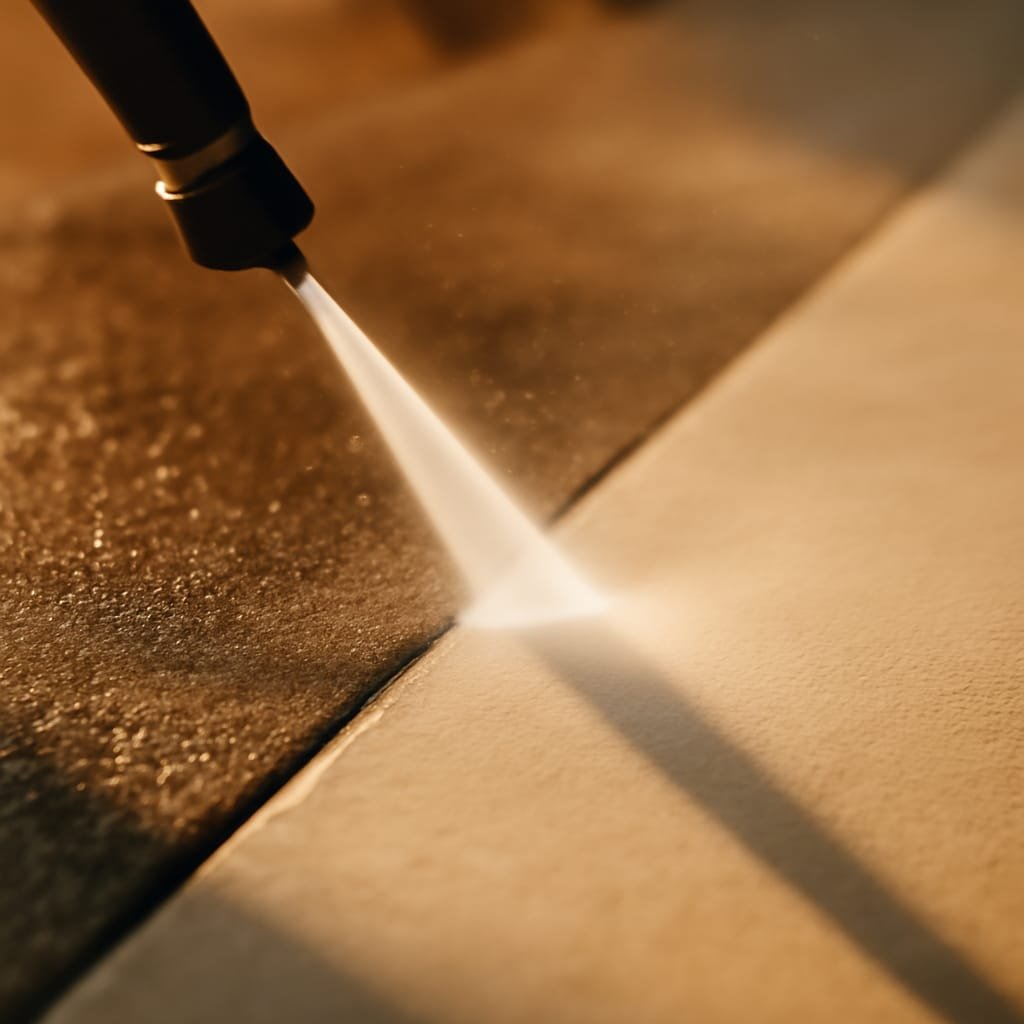
Achieving a pristine clean without damaging your property requires specialized equipment and professional training. At Golden Choice Pro-Wash, we employ advanced industry techniques that prioritize the long-term health of your hardscapes.
The Soft Wash Pre-Treatment Advantage
Instead of relying solely on raw water pressure to blast away organic growth, we apply a specialized, biodegradable cleaning solution prior to washing. This treatment targets mold, mildew, algae, and deep-seated spores at their root, breaking their bond with the porous concrete. By letting the cleaning agents do the heavy lifting, we can safely wash the surface using much lower, safer pressure levels.
Professional Surface Cleaners vs. Spray Wands
Using a standard handheld spray wand often leads to uneven cleaning and unsightly zebra striping. To ensure a uniform finish, Golden Choice Pro-Wash utilizes professional rotating surface cleaners. These circular attachments house multiple spinning nozzles that maintain a perfectly consistent distance and angle from the concrete surface, distributing the water pressure evenly and eliminating the risk of etching.
Important Pre-Wash Inspection Checklist
Before any cleaning project begins, a thorough assessment is necessary to identify potential hazards. If you are preparing your property for a clean, ensure you review these critical areas first:
- Inspect for Hairline Cracks: High-pressure water forced into existing cracks can wash away the underlying dirt and sub-base, leading to sinking, shifting, and major structural cracking later on.
- Check Joint Sand and Expansion Joints: Harsh washing can blast out the flexible expansion joint material or polymeric sand between concrete slabs, leaving the gaps vulnerable to weed growth and water intrusion.
- Identify Oil and Chemical Spills: Petroleum-based stains penetrate deep into concrete pores. These areas require specialized degreasers and hot water technology, as cold water pressure alone will only spread the oil further.
Ensuring Long-Term Protection
Once your concrete pathways and driveways are clean, they are highly susceptible to re-soiling and moisture absorption. Experts recommend applying a high-quality penetrating sealer after a deep clean. This protective barrier shields the porous material from water penetration, freeze-thaw damage, oil stains, and rapid organic regrowth, keeping your outdoor spaces looking pristine for years to come.
If you want to restore the beauty of your driveways, sidewalks, or patios without risking costly surface damage, let the experienced team at Golden Choice Pro-Wash handle the job safely and professionally. Contact us today to schedule a consultation and receive a personalized property assessment.