


For centuries, Iron has been the material of choice for crafting elegant gates, sturdy railings, and decorative light fixtures that define a property’s character. Yet, beneath the structural strength of this classic metal lies a persistent vulnerability to the elements. Many homeowners notice the sudden appearance of orange streaks or bubbling paint and wonder how a material so incredibly durable can degrade so quickly.
Understanding the molecular vulnerability of your metal fixtures is the first step toward preserving them. When unprotected metal meets oxygen and moisture, a chemical reaction known as oxidation begins, silently compromising the integrity of your fixtures. Golden Choice Pro-Wash has put together this guide to help you understand the hidden mechanics of metal decay and how to safeguard your property’s valuable metalwork.
The Chemistry of Corrosion: How Iron Degrades
To effectively protect your exterior fixtures, it helps to understand exactly what happens when raw metal meets the open air. Unlike other metals that form a protective patina when they oxidize, this specific metal behaves in a highly destructive manner when exposed to the elements.
The corrosion process relies on a delicate but destructive chain reaction:
- Oxygen Exposure: Oxygen molecules in the air constantly collide with the surface of the metal.
- Moisture Catalyst: Rain, dew, and high humidity act as an electrolyte, accelerating the transfer of electrons between the metal and the oxygen.
- Volume Expansion: As the metal oxidizes, the resulting rust occupies up to six times the volume of the original metal, causing surrounding paint and powder coatings to crack and peel.
This volume expansion is the primary reason why simple surface-level paint jobs often fail within a single season. If the underlying oxidation is not completely neutralized, the metal will continue to expand and push the new paint away from the surface.
The Hidden Threat: Internal Pocket Rusting
One of the most challenging aspects of maintaining exterior Iron is that the most severe damage often occurs where you cannot see it. Hollow decorative posts, welded joints, and bracket connections are notorious for trapping moisture internally.
The Capillary Action of Standing Water
Microscopic cracks in paint or tiny gaps in weld seams act as straw-like channels, drawing moisture inward through capillary action. Once water enters these enclosed spaces, it has no way to evaporate quickly, creating a high-humidity chamber that continuously eats away at the metal from the inside out.
Crevice Corrosion at Connection Points
Where two metal surfaces are bolted or riveted together, a tiny gap inevitably exists. These crevices are highly susceptible to localized corrosion because they retain moisture far longer than exposed flat surfaces. Industry research shows that crevice corrosion can progress up to ten times faster than open-air surface rusting.
The Critical Role of Surface Preparation
When it comes to restoring weathered metal, preparation represents about ninety percent of the work. Applying a fresh coat of rust-inhibiting paint directly over active corrosion is a temporary cosmetic fix that actually traps destructive moisture against the metal fibers.
Professional restoration standards emphasize a multi-stage preparation process to ensure long-term paint adhesion. First, all loose scale, bubbling paint, and powdery rust must be mechanically removed using wire brushes or specialized abrasive tools. This step reveals the stable, uncompromised metal beneath.
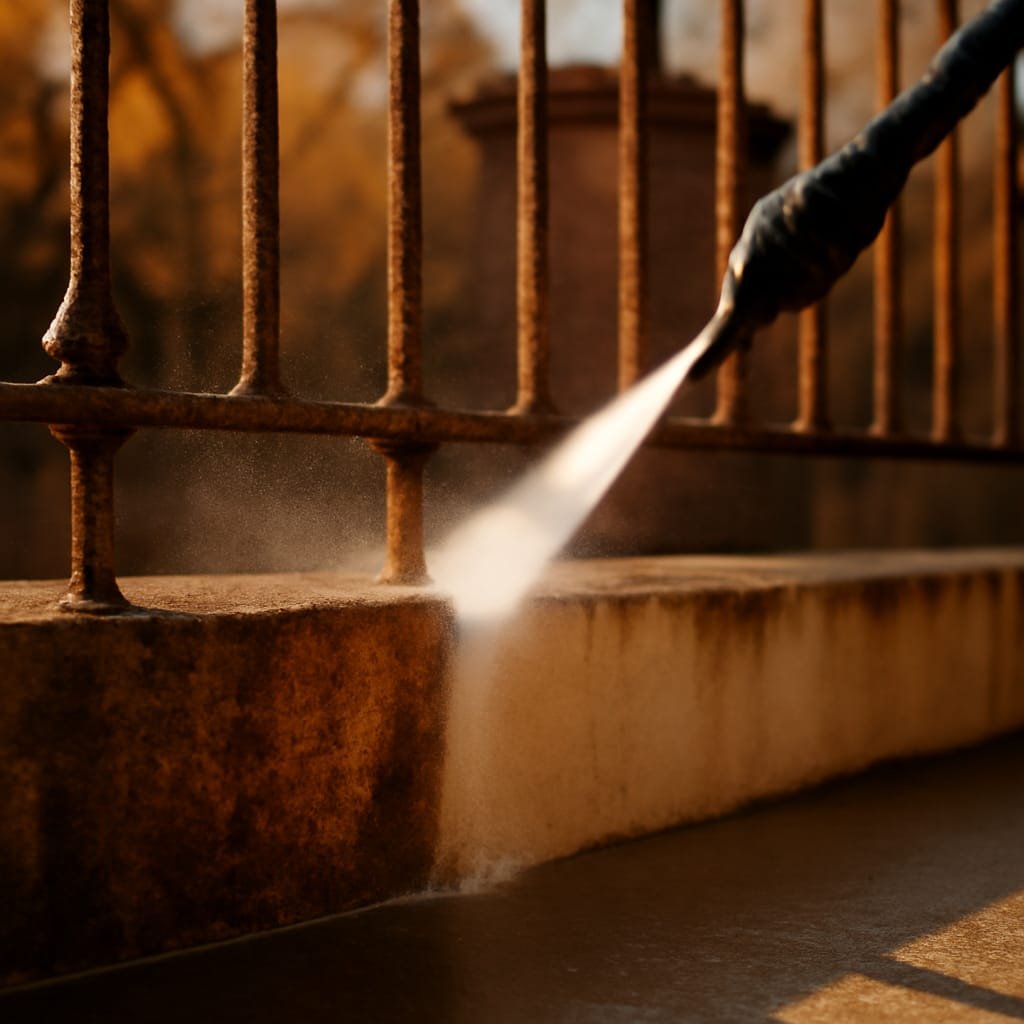
Next, the microscopic pores of the metal must be completely cleared of invisible contaminants like salt spray, pollen, and environmental acids. Golden Choice Pro-Wash utilizes specialized low-pressure washing techniques to deeply sanitize the metal pores without gouging the delicate ornamental details of older fixtures.
Designing a Proactive Maintenance Routine
Preventing structural failure in your metalwork does not require daily labor, but it does demand a highly strategic and consistent seasonal routine. By catching the early warning signs of oxidation, you can avoid the need for costly welding repairs or complete fixture replacements down the road.
- Bi-Annual Inspections: Examine your metal fixtures closely every spring and autumn, paying special attention to underside curves, welds, and ground contact points.
- Prompt Touch-Ups: Keep a small bottle of matching rust-preventative paint on hand to instantly seal minor scratches caused by lawn equipment or weed trimmers.
- Keep Vegetation Cleared: Ivy, dense bushes, and tall grass trap moisture against metal surfaces, creating a continuous wet microclimate that accelerates rust.
- Ensure Proper Drainage: Adjust lawn sprinklers to ensure they do not directly spray your metal gates or fence posts during watering cycles.
Protecting Your Property’s Historic Details
Preserving the architectural beauty of your exterior metalwork requires a balance of chemical understanding, meticulous physical preparation, and gentle cleaning. When you take the time to address oxidation at its source rather than simply covering it up, you extend the lifespan of your fixtures by decades.
If you suspect your exterior fixtures are beginning to suffer from deep-seated corrosion, or if you want to ensure your metal surfaces are perfectly prepped for a protective coating, professional assistance can save you valuable time and prevent irreversible surface damage. Contact Golden Choice Pro-Wash today to schedule a comprehensive exterior evaluation and keep your property looking its absolute best.