


The Surface Dilemma: Stripping Away the Confusion
Property owners often face a difficult decision when attempting to restore weathered, stained, or painted surfaces. Choosing the wrong cleaning method can lead to permanent structural damage or costly repairs. Understanding the difference between high-pressure water and abrasive blasting is essential for protecting your investment.
This guide compares Pressure Washing Vs Sandblasting Choosing The Right Surface Restoration Method so you can make an informed choice for your property. By examining the mechanics, risks, and ideal applications of each technique, you can preserve your surfaces without compromising their structural integrity.
At Golden Choice Pro-Wash, we believe that successful exterior maintenance begins with selecting the correct tool for the job. Let us dive into how these two powerful restoration methods operate and when to use them.
Understanding the Core Differences
While both methods aim to clean and restore, they rely on entirely different physical principles to achieve their results. The choice between them depends on the hardness of the underlying material and the type of contaminant you need to remove.
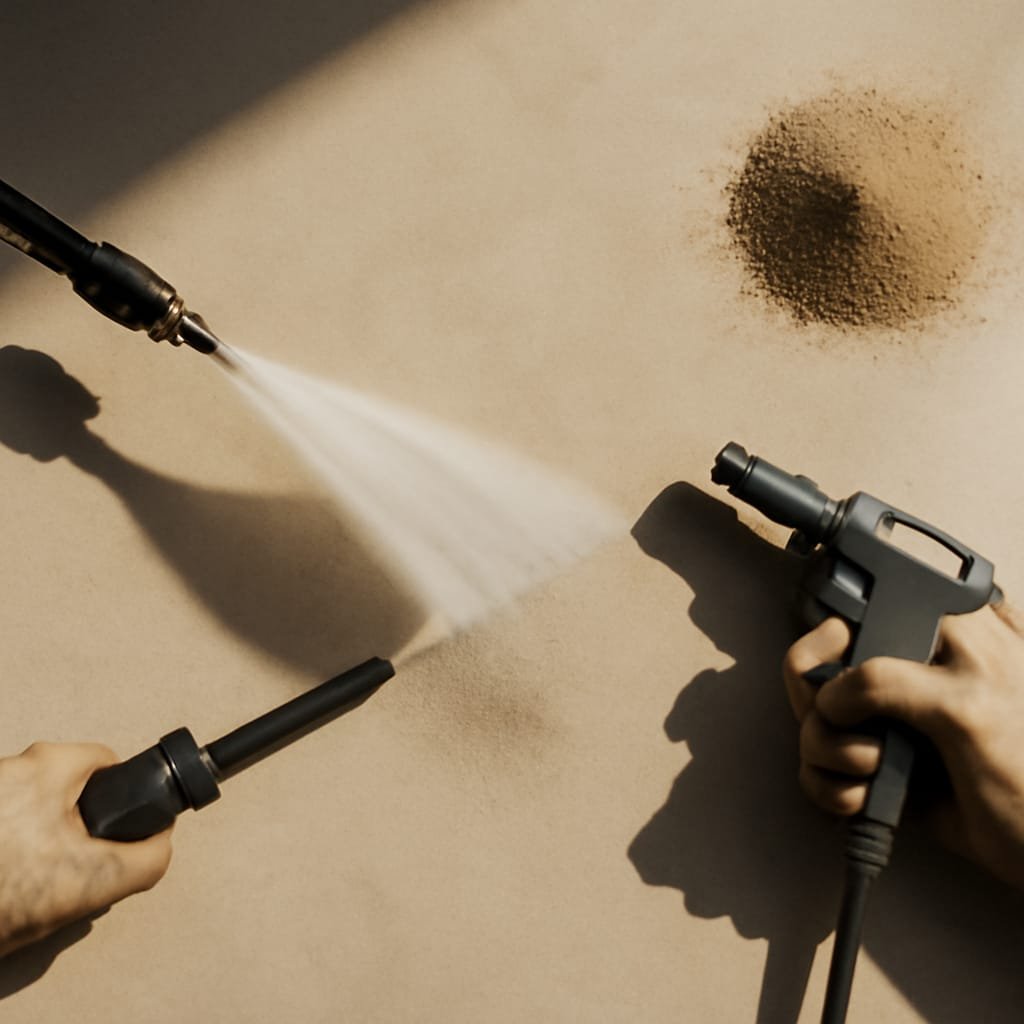
Pressure washing utilizes highly pressurized water to lift dirt, mold, mildew, and loose paint from surfaces. It relies on fluid dynamics and volume to flush away debris without altering the profile of the underlying material.
Sandblasting, on the other hand, is an abrasive process that uses compressed air to propel tiny particles of media at high speeds. This physical impact actually shears away the top layer of the material, making it highly effective for heavy-duty stripping but also highly destructive to softer surfaces.
When to Opt for Pressure Washing
Water-based cleaning is the preferred method for standard home maintenance and delicate outdoor surfaces. It is highly versatile and can be adjusted using different nozzles and chemical pre-treatments.
- Siding and Wood Decks: Soft wood and vinyl cannot withstand abrasive media without pitting or warping.
- Everyday Grime and Organic Growth: Mold, algae, and pollen are easily washed away with water and eco-friendly cleaning solutions.
- General Concrete Maintenance: Driveways, sidewalks, and patios benefit from pressure washing to remove tire marks and oil stains.
When Sandblasting Is the Necessary Choice
Abrasive blasting is reserved for heavy industrial applications or restoration projects that require the complete removal of resilient coatings. It is a highly specialized service that alters the texture of the substrate.
- Rust and Corrosion Removal: Metal structures, heavy machinery, and iron gates require abrasive force to reach bare metal.
- Stripping Industrial Paint: Multiple layers of baked-on industrial paint or epoxy coatings often resist water pressure alone.
- Creating a Surface Profile: Painting certain metals requires a rough texture, or “profile,” which sandblasting creates to help new coatings adhere.
The Critical Factor: Material Hardness and Tolerances
When analyzing Pressure Washing Vs Sandblasting Choosing The Right Surface Restoration Method, the hardness of your substrate is the ultimate deciding factor. Industry research shows that applying abrasive media to soft materials like brick, wood, or stucco can ruin the material permanently.
For example, historic brick has a hard outer kiln crust but a soft interior. Sandblasting strips away this protective outer crust, exposing the porous interior to rapid water absorption and winter freeze-thaw cracking. For brick and mortar, pressure washing at low, controlled settings is almost always the safer choice.
Conversely, attempting to remove thick layers of rust from heavy structural steel using only water is highly inefficient. In these heavy-duty scenarios, the dry, aggressive impact of sandblasting is required to prepare the metal for its new protective sealant.
Environmental and Safety Considerations
Beyond the physical impact on your surfaces, each restoration method carries unique environmental and clean-up requirements that property owners must consider. These factors can influence project timelines and preparation steps.
Pressure washing is generally more environmentally friendly because it primarily utilizes water and biodegradable detergents. The runoff can often be managed easily on-site, making it highly suitable for residential neighborhoods.
Sandblasting creates significant dust and airborne particulates, requiring strict containment barriers and personal protective equipment. The spent abrasive media must be carefully swept, collected, and disposed of according to local environmental regulations, adding complexity to the cleanup process.
Making the Right Choice for Your Property
To avoid costly mistakes, walk through a simple checklist before scheduling any exterior cleaning work. Ask yourself what material you are cleaning, what coating you want to remove, and what the surface should look like when finished.
For residential homes, light commercial buildings, and routine seasonal cleanups, pressure washing remains the safest and most cost-effective option. It restores curb appeal without threatening the structural integrity of your siding, concrete, or wood features.
If you are still unsure about Pressure Washing Vs Sandblasting Choosing The Right Surface Restoration Method, seeking a professional assessment is the best way to protect your investment. The team at Golden Choice Pro-Wash is always ready to evaluate your surfaces and recommend the gentlest, most effective cleaning path forward.
Contact Golden Choice Pro-Wash today to schedule a professional consultation and ensure your property receives the exact care it needs.