


The Hidden Chemistry Beneath Your Lawn Care Routine
Many homeowners take pride in maintaining a lush, green lawn. However, the very products designed to feed your grass can leave behind unsightly, stubborn discoloration on your hardscapes.
When granules of lawn food bounce onto your driveway, walkways, or patio, they often go unnoticed until the next rain or sprinkler cycle. Once moisture hits these mineral-rich pellets, they dissolve and sink deep into the pores of your masonry.
Addressing Fertilizer Stains From Exterior Surfaces is not as simple as hose-rinsing or standard pressure washing. These blemishes are actually chemical reactions bound to the stone, requiring a specialized approach to safely lift.
Why Standard Cleaning Methods Fail on Fertilizer Stains
The most common mistake property owners make is treating these orange and brown spots like ordinary dirt. Standard soap and water will not budge them, and aggressive scrubbing often does more harm than good.
The Iron Link to Concrete Discoloration
Most high-quality lawn foods contain high concentrations of iron, magnesium, and nitrogen. Iron is the primary ingredient responsible for that deep green grass color, but it is also the direct cause of the orange-brown staining on your concrete.
When these metallic compounds dissolve in water and meet the highly alkaline surface of concrete or stone, they oxidize instantly. This oxidation process is virtually identical to rust, meaning you are dealing with a metallic bond rather than a surface-level spill.
The Risk of High-Pressure Washing
It is natural to assume that turning up the pressure will blast the discoloration away. Unfortunately, blasting high-pressure water onto these delicate mineral bonds can actually push the iron oxides deeper into the porous concrete substrate.
Even worse, excess pressure can permanently etch the cream coat of your concrete. This leaves behind permanent wand marks and irreversible structural damage while leaving the deep rust hue untouched.
The Science of Safely Restoring Damaged Hardscapes
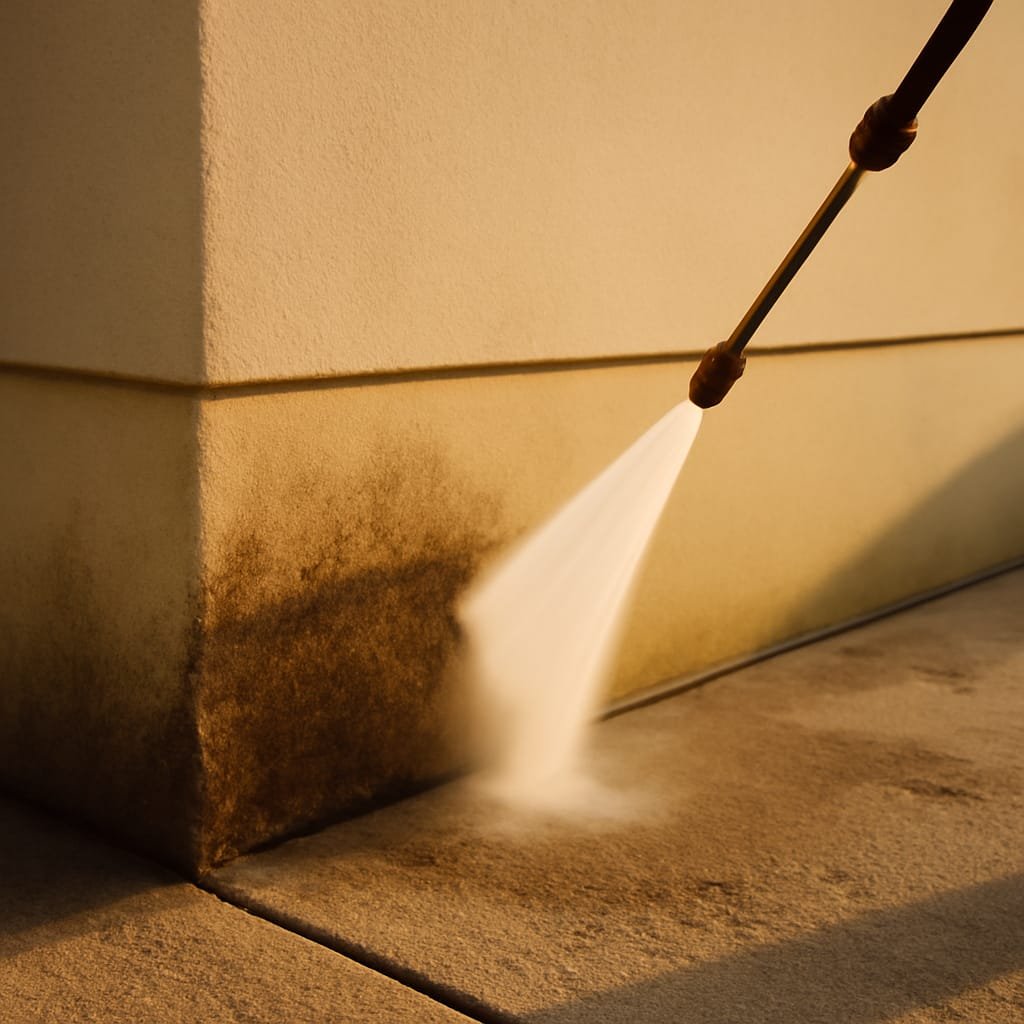
To successfully lift Fertilizer Stains From Exterior Surfaces, you must break the chemical bond between the iron oxides and the concrete pores. Industry research shows that chemical neutralizers are the only effective way to release these metallic compounds.
* pH Balancing: Because iron rust is highly stable on alkaline surfaces like concrete, professional-grade acidic restorers are required to shift the pH balance and dissolve the metal.
* Targeted Application: Applying the correct solution requires precision, as over-application can strip the natural color or texture of your pavers or brick.
* Thorough Rinsing: Once the chemical bond is broken, the dissolved minerals must be completely flushed away using low-pressure, high-volume rinsing to prevent them from settling back into the pores.
How to Prevent Fertilizer Stains From Exterior Surfaces
The easiest way to deal with stubborn mineral discoloration is to prevent it from happening in the first place. A few simple adjustments to your lawn care routine can save your hardscapes from seasonal damage.
Sweep Before You Water
Always sweep or blow your sidewalks, patios, and driveways immediately after applying any lawn products. Ensure every single granule is pushed back into the grass before the irrigation system turns on or rain begins to fall.
Monitor Irrigation Overspray
Misaligned sprinkler heads can carry dissolved iron from your lawn directly onto your concrete surfaces. Regularly inspect your sprinkler patterns to ensure water is targeting the grass and landscape beds rather than spraying your hardscapes.
Consider Iron-Free Alternatives
If you have highly porous exterior surfaces that are prone to staining, look for iron-free organic fertilizers. While they may take slightly longer to show results on your turf, they completely eliminate the risk of leaving behind stubborn orange rust spots.
Trust the Exterior Restoration Experts
When mineral discoloration has already set into your concrete, brick, or stone, DIY remedies can often make the problem worse. Using the wrong off-the-shelf chemicals can permanently bleach your masonry or etch delicate stone surfaces.
At Golden Choice Pro-Wash, our team understands the complex chemistry behind outdoor surface restoration. We use specialized, biodegradable chelating agents to gently release Fertilizer Stains From Exterior Surfaces without risking damage to your concrete or surrounding landscape.
If you want to restore the clean, uniform look of your property’s hardscapes, let the professionals handle the chemistry safely. Contact Golden Choice Pro-Wash today to schedule a professional consultation and breathe new life into your outdoor surfaces.