


For construction companies and fleet managers, heavy machinery represents a massive financial investment. Accumulated mud, asphalt, grease, and concrete dust do more than just make your bulldozers and excavators look unprofessional. Over time, this debris hides mechanical failures, accelerates component wear, and clogs cooling systems, leading to costly downtime. Learning How To Clean Heavy Equipment Construction Vehicles Safely is essential for preserving your machinery and protecting your operators.
At Golden Choice Pro-Wash, we understand that heavy equipment requires a specialized approach. Standard pressure washing methods can easily damage sensitive electronics, hydraulic seals, and delicate engine components. In this guide, we break down the critical steps, safety protocols, and commercial considerations you need to know to maintain your fleet without risking your assets.
The True Cost of Fleet Maintenance: Binding Quotes vs. Hourly Rates
When hiring a professional service to clean your fleet, how you are billed matters just as much as the cleaning process itself. Many traditional contractors charge hourly rates for heavy equipment washing. While an hourly rate might seem appealing initially, it often leads to unpredictable final costs, especially when dealing with stubborn, baked-on concrete or heavy grease that requires extra time to dissolve.
Golden Choice Pro-Wash advocates for a value-proposition pricing model. We provide transparent, binding quotes instead of open-ended hourly rates. A binding quote ensures you pay a flat, agreed-upon price per vehicle or fleet package, regardless of how long the deep-cleaning process takes. This pricing structure allows construction managers to budget accurately, eliminates surprise fees, and ensures the job is done thoroughly rather than rushed to meet a ticking clock.
The 4-Step Process for Heavy Equipment Fleet Safety
Cleaning multi-ton machinery requires systematic execution to prevent accidents and equipment damage. Industry research shows that most mechanical failures post-cleaning occur due to improper water intrusion. Following a strict safety protocol mitigates these risks entirely.
1. Pre-Inspection and Electronic Safeguarding
Before any water touches the machine, operators must perform a comprehensive walk-around. Identify and seal off sensitive areas, including the alternator, intake valves, fuse boxes, and cabin electronics. Golden Choice Pro-Wash technicians utilize specialized heavy-duty wrapping to protect these high-risk zones from moisture intrusion.
2. High-Volume, Low-Pressure Debris Removal
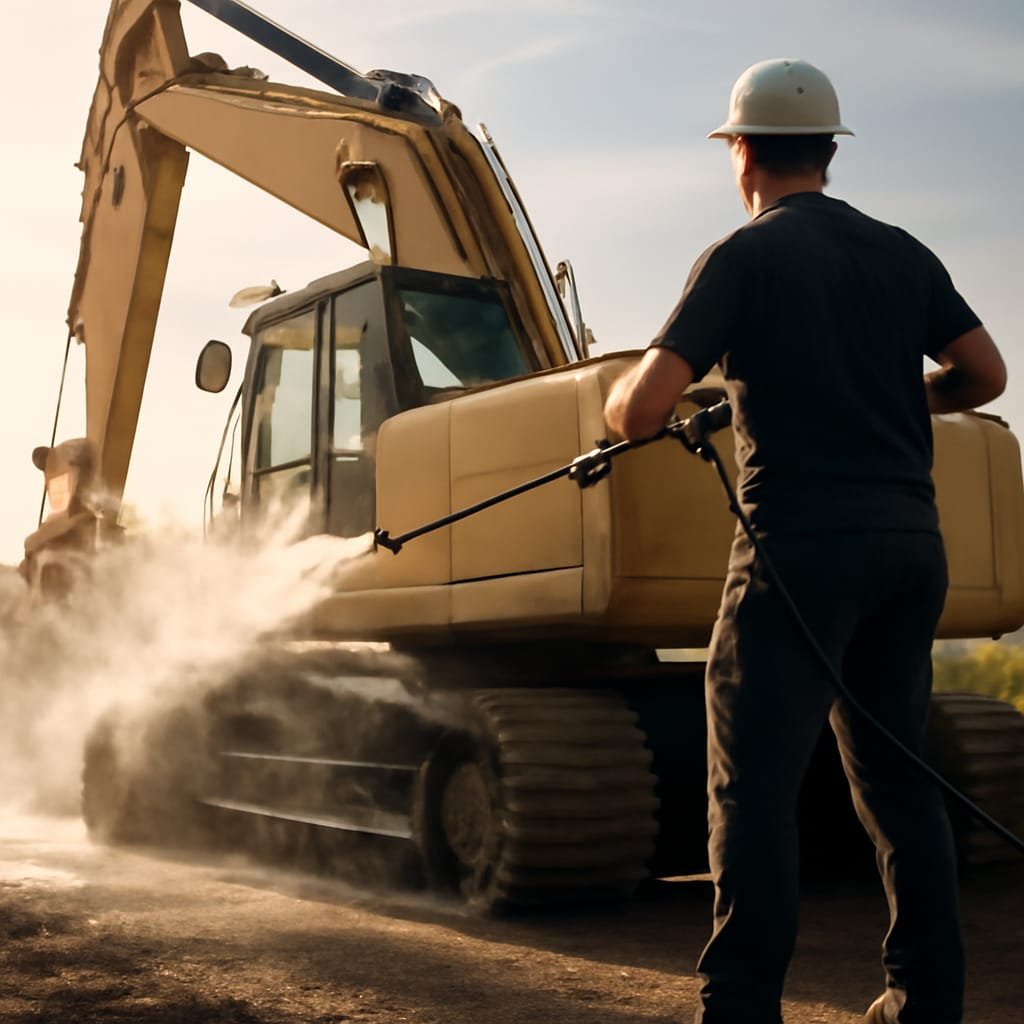
Attempting to blast away thick cakes of mud with extreme pressure can drive abrasive grit deep into hydraulic cylinders and rotary joints. Instead, start with a high-volume, low-pressure rinse. This softens and flushes away the bulk of the heavy mud and dirt safely, preparing the metal surfaces for targeted cleaning.
3. Targeted Degreasing and Chemical Application
Heavy machinery accumulates petroleum-based grime that water alone cannot dissolve. Applying biodegradable, industrial-grade degreasers is necessary to break down these stubborn oils. Our team at Golden Choice Pro-Wash uses environmentally compliant agents that lift grease without damaging the vehicle’s paint, decals, or protective clear coats.
4. Controlled Detail Washing and Final Inspection
Once the grime is loosened, a controlled hot-water wash is applied to sanitize and rinse the surfaces clean. Hot water is particularly effective at melting away grease and asphalt. The process concludes with a thorough inspection to ensure all articulation joints, radiator fins, and safety decals are completely clear and visible.
Essential Safety Protocols for Fleet Cleaning
The physical act of washing heavy machinery presents unique hazards. To execute this task without injury or liability, your cleaning team must adhere to strict safety standards.
- Lockout/Tagout (LOTO): Always ensure the vehicle is completely powered down, keys are removed, and the master battery switch is turned off before starting the wash.
- Articulated Lock Bars: For articulated loaders and dump trucks, always install the safety lock bars to prevent the machine from folding or moving during the cleaning process.
- Environmental Containment: Runoff from construction vehicles contains oils, grease, and heavy metals. Professional washing must utilize containment mats and vacuum systems to capture wastewater, preventing environmental fines and compliance issues.
- Personal Protective Equipment (PPE): Technicians must wear high-traction boots, safety goggles, heavy-duty gloves, and respiratory protection when working around dislodged silica dust or industrial chemicals.
Why Professional Equipment Standards Matter
While DIY cleaning with a basic pressure washer is tempting, consumer-grade equipment lacks the power, temperature control, and safety features required for heavy machinery. True commercial cleaning requires hot-water pressure washers capable of reaching temperatures up to 200 degrees Fahrenheit, combined with precise pressure regulators.
At Golden Choice Pro-Wash, our advanced mobile units are engineered specifically for the demands of industrial fleets. By combining specialized hot-water technology with commercial water reclamation systems, we deliver a superior clean that keeps your business compliant with local environmental regulations. Our technicians are highly trained in the mechanical layouts of various construction models, ensuring we never spray water where it does not belong.
Maximize Your Fleet’s Lifespan Today
Investing in professional fleet maintenance is an investment in the longevity and safety of your construction business. Regular, high-quality cleaning prevents premature wear, keeps your operators safe, and projects a highly professional image on every job site.
Ready to experience the difference that professional standards and transparent pricing can make for your fleet? Contact Golden Choice Pro-Wash today to receive your customized, binding quote on how to clean heavy equipment construction vehicles safely and efficiently.